

- Email is for tiny previews only.
- A browser-based transfer link handles one-off delivery.
- A client portal or managed file transfer workflow fits files that are large, sensitive, recurring, or tied to approval.
- Physical media or a cloud ingest location is for when the client’s network can't handle the transfer at all.
Start with the client’s actual constraint
Before choosing the tool, identify what will break on the client side. Non-technical clients are often on a locked-down corporate laptop or hotel Wi-Fi. Others are cutting it close to a newsroom deadline, or sitting behind a company network with strict download rules. The common constraints are one of these:- They can't receive email attachments over a small limit, often around 25 MB.
- They can't install desktop apps, browser extensions, FTP clients, or sync tools.
- Their IT department blocks unfamiliar file-sharing domains.
- Their network is too slow or unstable for a single huge file.
- They need to preview the file before committing to a download.
Use the smallest delivery that satisfies the job
Large file delivery gets easier when you separate review from final delivery. Many client problems happen because teams send massive masters when the client only needs to approve content. For review, send a lightweight viewing file whenever possible. An H.264 or H.265 MP4 with a clear filename is easier for a client to open than a mezzanine export or an EXR sequence. The same goes for a WAV stem package or a camera original folder. If the client only needs to comment, approve, or choose a take, don't make them download 80 GB. For final delivery, preserve the requested quality. If the spec calls for ProRes, DNxHR, or WAV, deliver exactly that. The same holds for TIFF, layered PSD, and camera originals. Don't run everything through a consumer compression tool just to make transfer easier. Use a transfer method that can handle the original files without re-encoding or quality loss. A practical delivery pattern looks like this:- Send a small MP4, PDF, JPEG set, or audio preview for review.
- Include a short email explaining what the client should open first for approval context.
- Deliver the final asset as an original-quality file or folder package.
- Add a delivery note with the file count, expected size, expiration date, and who to contact if access fails.
Browser-based transfer links are the default for one-off delivery
For most non-technical clients, a browser-based transfer service is the cleanest option. The sender uploads files, the service generates a link or email notification, and the recipient downloads through a web page. The client doesn't install anything, doesn't configure FTP, and ideally doesn't create an account.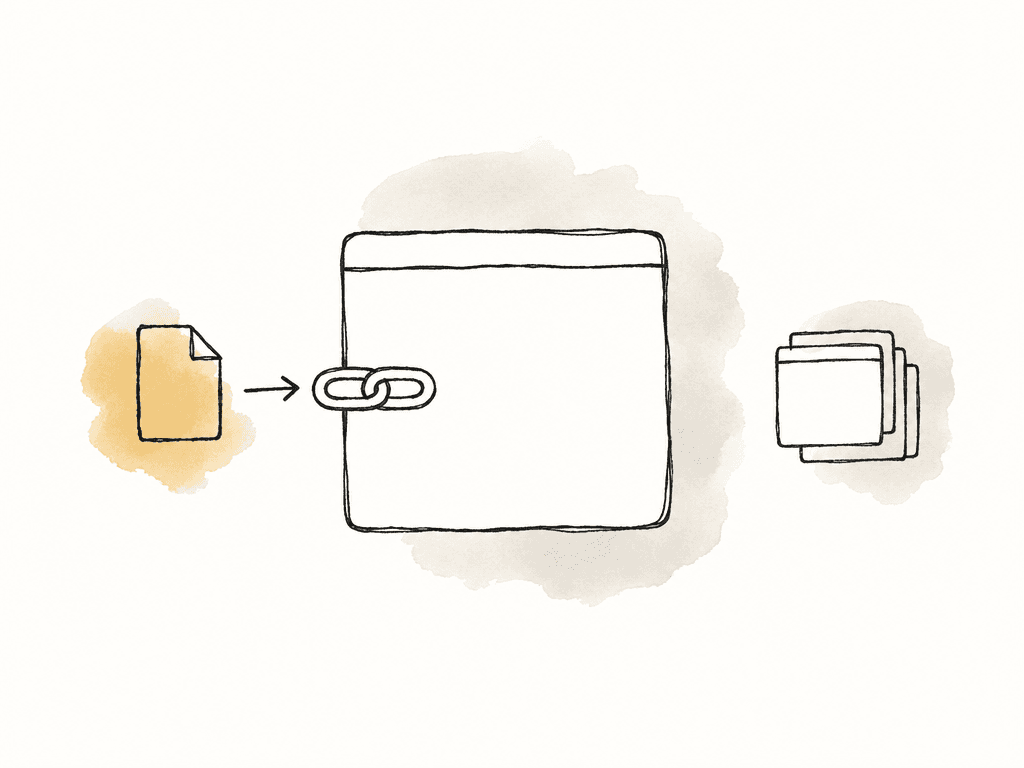
- Final exports
- Small batches of stills
- Audio mixes and stems
- Review PDFs
- Design packages
| Service | Free tier | Paid entry | Per-transfer ceiling |
|---|---|---|---|
| WeTransfer | 3 GB per transfer, but capped at 3 GB total across 10 transfers per rolling 30 days, expiring in up to 3 days | Starter $10/month | 300 GB on Starter; no stated limit on Ultimate at $25/month |
| Dropbox Transfer | 2 GB per send | Bundled with paid Dropbox plans | Up to 250 GB on higher plans or with add-ons |
| Smash | No size limit, files held 7 days | Pro, published pricing | 250 GB on Pro, up to 1 TB on Team |
| Filemail | 5 GB per transfer, 2 transfers per day | Pro $20/month | 250 GB on Pro; unlimited on Business and Enterprise |
| MASV | 15 GB per month | $250 per TB, no subscription required | No practical ceiling; billed by volume |
| Signiant Media Shuttle | None | Not published; annual subscription by user tier | Built for sustained multi-terabyte movement |
When cloud drive links work, and when they create friction
General cloud storage is familiar, which is its biggest advantage. Many clients already know how to open a shared folder from common office ecosystems. If the client’s company standardizes on one platform, using that platform may be easier than introducing a new transfer service. Cloud drive links work best when:- The client already has access to the platform.
- The files need to stay available for weeks or months.
- Multiple people need ongoing access.
- You're sharing organized folders rather than a one-time package.
- The client may need to come back later for the same assets.
Avoid FTP for non-technical client delivery
FTP still appears in media workflows, especially around broadcast, archive, and older vendor handoffs. For non-technical clients, it's a poor fit. Traditional FTP has several problems for this use case:- It often requires separate client software.
- Firewalls can block or complicate it.
- Basic FTP doesn't encrypt credentials or transfers.
- Folder navigation can be confusing for recipients.
- The client may not notice failed transfers.
Package files so the client knows what they received
The link gets the client to the download page, and the package tells them whether they downloaded the right thing.
- Project or campaign name
- Version number or delivery date
- Asset type, such as review, final, audio, stills, subtitles, or source
- File count
- Total package size
- Any required software or codec note
- The person responsible for the delivery
Manage expiration dates like a production detail
Expiring links are useful because they limit exposure, reduce stale access, and keep temporary delivery services from becoming unmanaged archives. They also create a predictable support problem: the client misses the window and asks you to resend. Set expiration based on real client behavior rather than the default. A seven-day link may be fine for a producer on deadline. It may be a bad fit for a corporate client who needs legal, brand, and regional teams to review before downloading. A practical expiration policy can be simple:- Use 3 to 7 days for same-day deadline delivery.
- Use 14 to 30 days for normal client review or download.
- Use 30 days or a persistent client folder for a multi-department handoff.
- For sensitive unreleased material, use the shortest window that still fits the business need.
- For final archive delivery, don't rely on an expiring transfer link as the archive.

Balance security with accessibility
Security controls are only useful if the client can get through them. For non-technical recipients, every added step increases the chance of a support email. The trick is to match controls to risk. For low-risk files, a private link sent directly to the client may be enough. For unreleased media, legal documents, or financial data, add more control. Talent materials and confidential campaign work need the same treatment. Common controls include:- Password-protected links
- Email-restricted access
- Link expiration
- Download limits
- Watermarked preview files
- Download notifications
- Malware scanning
- Checksum verification
- MFA or SSO for higher-security portals
Verify the file before and after transfer
For original camera data and high-value production media, basic file copy isn't enough. Professional media workflows use checksum verification to confirm that files copied completely and without corruption. This is especially important before erasing camera cards, shuttle drives, or temporary storage. In practical terms, your team should verify in two places. First, verify your source package before uploading. If you're sending camera originals, exports, or a folder that came from a DIT, confirm that the package is complete and that any checksum manifest or media hash list matches. Don't upload a folder you haven't checked, then make the transfer tool responsible for proving your source was good. Second, use transfer tools that provide integrity checks, resumable transfers, or download confirmation when the stakes justify it. A simple link may be fine for a 300 MB approval MP4. A 2 TB production handoff needs more evidence. Mention the expected file count and size in your delivery note. That gives the client or receiving technician a simple way to spot obvious problems before they start using the media.Help clients who can't download huge files
Sometimes the client is willing but their environment isn't. Their company blocks large downloads, or their office Wi-Fi drops every hour. Their browser may choke on a massive package, or their IT team may quarantine unknown archives. In those cases, changing tools may not be enough. There are a few workable approaches:- Send a smaller proxy for review and delay full-resolution delivery until IT approves a path.
- Split the delivery into smaller logical packages, such as reels, days, scenes, or asset types.
- Use a managed transfer service with resumable downloads.
- Upload directly into the client’s approved bucket, workspace, or MAM when available.
- Ship an encrypted physical drive for very large datasets or locked-down environments.

Write the email like the client has never used the tool
The delivery message is part of the workflow. Keep it short, specific, and free of technical jargon. A good client delivery note includes:- What the file is
- What they should do with it
- Whether they can preview it in the browser
- Whether they need to download it
- The total size
- The expiration date
- The password process, if applicable
- Who to contact if the link fails
Choose based on the handoff pattern
The right solution depends less on the file size alone and more on how often this handoff happens.| Handoff pattern | Better delivery choice | Useful controls | Why it helps the client |
|---|---|---|---|
| One-time file delivery | WeTransfer, Smash, or MASV, none of which need a recipient login | Expiration, optional password, download notification | The client can open one link and download without installing anything |
| Recurring client delivery | A branded portal such as Signiant Media Shuttle, or a dedicated client folder in Dropbox or Aspect | Permissions, version naming, access history | The client always knows where current deliveries live |
| Review and approval | Lightweight MP4, PDF, still set, or review link | Watermarking, comments, link expiration | The client can approve content without downloading full-resolution media |
| Sensitive unreleased media | Managed transfer service or approved client portal | Encryption, access restrictions, audit logs, download tracking | Security is stronger while the recipient path stays controlled |
| Client has download limits | Smaller logical packages, resumable transfer, or upload to their approved system | Clear file counts, package sizes, retry support | Failed downloads are easier to recover from |
| Very large source or camera media | MASV or Signiant for resumable managed transfer, or an encrypted physical drive | Checksums, drive tracking, separate password channel | The delivery preserves integrity and avoids repeated failed transfers |
FAQ
Use a browser-based transfer link that lets the client preview or download the file without installing software or creating an account. For most one-off deliveries, this is easier than FTP, sync apps, or shared workspaces. Add an expiration date, password, or download notification if the file needs more control.
Send the smallest file that satisfies the client’s immediate need. If they only need to review, comment, or approve content, send a lightweight MP4, PDF, JPEG set, or audio preview. Save the production-quality files for final delivery or for when the spec requires them: ProRes, DNxHR, WAV, TIFF, and camera originals.
Set the expiration based on how the client will actually use the file. A deadline delivery may only need 3 to 7 days, while normal review may need 14 to 30 days. Multi-department reviews may need a longer window or a persistent client folder. Always state the expiration date clearly in the delivery email.
First confirm whether their company blocks large downloads or whether the issue is connection stability. Then consider sending a smaller proxy, splitting the delivery into logical packages, or using a resumable transfer service. Uploading into the client’s approved storage system works too, and an encrypted physical drive is the fallback. For very large media, a tracked physical drive can be more reliable than repeated failed downloads.
Tell the client what the file is and what they should do with it. Say whether they can preview it in the browser or have to download it. Include the total size, the expiration date, and who to contact if access fails. If the link is password-protected, send the password separately when the material is sensitive.
Use a managed share instead of a public-style link when the asset is sensitive or likely to be forwarded. Aspect lets teams set view or download access, plus password protection and expiry, as part of granular sharing permissions.


