

The decision criteria that actually matter
Before comparing products, separate the workflow into a few concrete jobs. Most bad tool decisions happen because teams compare feature grids. Nobody traces what actually happens to a file from shoot to edit to review to archive. The main questions are:- Is this tool the source of truth for working media, or only a review destination?
- Can editors open media from a mounted drive, or do they need to download, sync, relink, and re-upload?
- Does the tool support frame-accurate comments, annotations, replies, notifications, and version management?
- Can clients and stakeholders review without becoming paid internal users?
- Does the platform understand metadata as structured fields, or only as text search and folder names?
- Can AI search find footage by transcript, people, objects, scenes, and custom metadata?
- What happens when your team exceeds storage, seats, workspaces, or project limits?
- Does the product fit your Adobe workflow, or are you intentionally trying to reduce Adobe dependency?
Workflow fit at a glance
| Tool | Source of truth for working media? | Mounted editor access | Review and approval depth | Metadata and AI search | Best fit | Main watchout |
|---|---|---|---|---|---|---|
| Frame.io | Often used as a review hub, with broader storage and workflow features expanding | — | Strong baseline for timestamped comments, annotations, versions, review links, and Adobe-connected workflows | Metadata fields and Collections for organizing assets, with search across filenames, comments, and metadata | Teams that want a mature review hub closely connected to Adobe workflows | Confirm storage, member, guest, workspace, archival, and mounted-storage limits for the account model you plan to use |
| Aspect | Yes, positioned as the shared media file space as well as the review layer | Yes, mounts projects or folders as a network-drive-like desktop location with streaming, cache controls, and offline pinning | Covers frame-accurate comments, annotations, replies, notifications, version stacking, and Premiere Pro timeline comments | Strong fit for typed metadata, transcript search, people, objects, scene descriptions, custom fields, APIs, SDKs, and webhooks | Teams consolidating review, cloud storage, mounted editing access, metadata, and AI media search | More platform than needed if the only job is lightweight approval or final delivery |
| Wipster | No, this is a focused review destination | Not a mounted working-media filesystem | Good fit for frame-accurate commenting, version control, and client sharing | Not a system for structured metadata or AI archive search | Teams that want cleaner review and approval while keeping storage elsewhere | Source media, archive search, and editor access still need another system |
| Ziflow | No, this is an approval workflow platform across creative assets | Not editor-mounted media storage | Stronger fit for routing, tasks, accountability, and stakeholder approvals | Not a media archive search layer | Teams whose main bottleneck is approval process across video, design, web, documents, campaigns, or compliance | May need separate tools for shared storage, proxy workflows, NLE handoff, and archive retrieval |
| TrunkTransfer | No, this is a delivery layer | Not mounted editor access | Limited fit for review if clients need annotations, revisions, or version comparison | Not metadata or AI search infrastructure | Agencies that mostly need clean final-file delivery | Does not replace a full creative review stack by itself |
| Krock.io | No, review and project tracking rather than working-media storage | No mounted filesystem; browser-based | Review organized around production stages, scenes, boards, and episodes, which suits animation and series work | Project and task structure rather than AI search over footage | Teams exploring more production-structured review workflows | Do not assume parity with Frame.io or Aspect without testing the exact workflow |
| Shumai | Yes, on storage you run: local filesystem or any S3-compatible bucket such as AWS S3, Cloudflare R2, or MinIO | No mounted filesystem; browser-based review | Frame-by-frame annotations, comments, collections, and role-based access | Semantic search over visual meaning using Gemini embeddings, plus AI metadata autofill. No transcription, face, or object detection | Technical teams that want open-source control over storage and deployment | Requires engineering ownership for hosting, security, upgrades, backups, support, and maintenance |
| MASV plus MAM | The MAM or archive system is usually the source of truth, while MASV handles transfer | Depends on the connected MAM or storage system | Depends on the review or MAM layer connected downstream | Useful for metadata capture during intake when connected to systems such as a MAM | Teams whose real bottleneck is large-file ingest, contributor upload, delivery, or metadata capture | Not a one-tool Frame.io replacement unless review, storage, and archive workflows are covered elsewhere |
| Dropbox, Google Drive, and generic cloud storage | Can hold files, but not usually a purpose-built media operations source of truth | Desktop sync exists, but this is not the same as a media-aware mounted editing workflow | Weak fit for frame-accurate comments, versioned approvals, and auditable production review | Usually relies on folders, filenames, and generic search rather than media-specific metadata and AI understanding | Teams with lightweight sharing needs and informal feedback | Feedback, versioning, and approvals often spill into Slack, email, filenames, and spreadsheets |

Frame.io is still the baseline for review
Frame.io should be the comparison anchor because its review stack is genuinely strong. Its public pricing and support materials list comment and annotation features, version management, and storage tiers. The same materials cover apps and integrations, plus branded shares on paid plans. Frame.io has also been expanding beyond classic review. Its 2026 "What's New" page mentions better search, SDK updates, Workfront integration, and Premiere login improvements. Frame.io does review well. The question is whether its broader operating model fits your team. A few Frame.io-specific considerations matter during evaluation:- Frame.io storage scales with members on paid Frame-managed accounts.
- Frame.io displays banners when accounts reach certain plan limits, including active storage, archival storage, project limits on the Free plan, member limits, guest member limits, and workspace limits.
- Frame.io's legacy account documentation says team members and collaborators have more access and control and are paid users, while some comment-only or approval-only review access doesn't require a paid user.
Aspect: best when Frame.io stopped being enough because review is only one part of the media stack
Aspect is for teams whose problem is no longer "replace comments on videos." It is for teams trying to reduce the number of tools sitting around their media. Aspect combines cloud media storage with review and approval. It adds a mounted shared file space, structured metadata, and AI-powered media search. Teams upload multimedia files, collaborate and review, stream video locally like a NAS, and automate media work with AI. That covers roles teams often split across Dropbox-style storage, LucidLink-style mounted access, and Frame.io-style review. For review, Aspect covers the core Frame.io-style workflow. You get frame-accurate comments, annotations and markup, and replies with notifications. Versions stack, and a Premiere Pro panel shows comments directly in the timeline. That is the tradeoff most Frame.io alternatives force on you: storage with weaker review, or good review with storage somewhere else. The bigger difference is that Aspect treats the media file space as the center of the workflow. Editors mount a shared project as a network-drive-like location on the desktop. Files stream on demand as Finder, File Explorer, or an NLE requests data. Teams can configure cache size and location, pin files or folders for offline work, and mount several projects at once. That fits editors who need to work from shared media rather than upload review exports into a separate destination.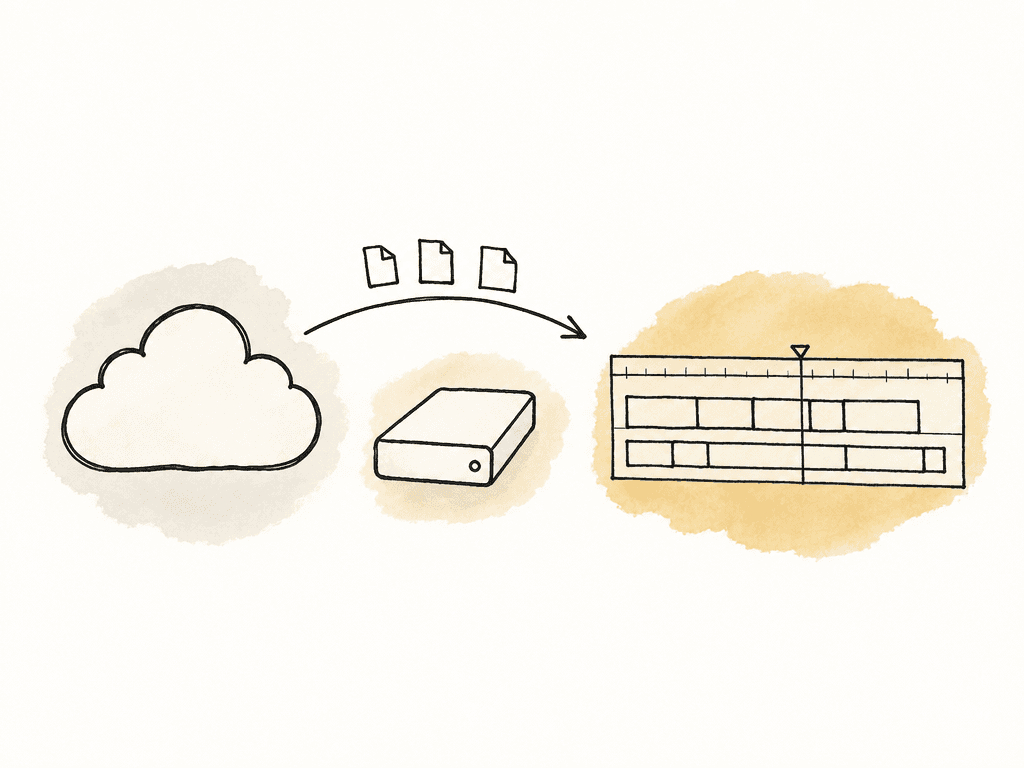
- Review is working, but files are scattered across drives, cloud folders, transfer tools, and archives.
- Editors need a mounted cloud file space, not just browser review links.
- Your team wants review comments and working media in the same system.
- You need metadata fields that behave more like a database than a filename convention.
- You want to search footage by what is in it, who appears, what was said, or custom production attributes.
- You're trying to consolidate several media tools rather than buy another point solution.
Wipster: best when you want a focused review-and-approval alternative
Wipster is for teams that want video review and approval without taking on a broader media-storage platform. It aims at frame-accurate commenting, version control, and client sharing. Teams arrive here when Frame.io pricing, interface complexity, or agency fit has become a concern. Wipster is worth considering if your workflow is still export-driven. Editors keep working media wherever it already lives, and Wipster becomes the client and stakeholder review layer. That narrower scope is a benefit if your team has no desire to move storage, mount media into NLEs, or rebuild archive search. The tradeoff is structural. A review-focused tool can make approvals cleaner, but it does not remove the storage and handoff problem. You still have to decide where source files live and how editors reach them. You also need a plan for how final exports move and how anyone finds old assets later. Wipster is best for teams that primarily want a simpler review-and-approval destination and are happy keeping working media in another storage system.Ziflow: best when approval process matters more than editor-native media workflow
Ziflow is for teams thinking about approval workflows more broadly than video post. Ziflow helps teams collect comments, assign tasks, and move work through approvals. Some Adobe customers have had to move from Workfront Proof to Frame.io, which makes approval-process continuity part of the evaluation. This is a different buying motion from "what should our editors cut from?" Ziflow is more compelling when the pain is routing, accountability, and stakeholder follow-through across creative work. Some approval processes span video, design, and web. Others add documents, campaigns, and compliance review. A proofing workflow platform may fit those better than a media-first review tool. The watchout is the same as with any approval-oriented system. Make sure it fits the media operations underneath. If editors still need shared storage, mounted access, and proxy generation, those stay separate purchases. The same goes for archive search and NLE-centered handoff. Ziflow is best for teams whose bottleneck is approval operations across creative assets, not shared working-media storage for editors.TrunkTransfer: best when Frame.io is overkill for final client delivery
TrunkTransfer is for teams that only ever used Frame.io as a clean way to send final files to clients. That is where delivery-focused tools enter the conversation. TrunkTransfer offers a flat-price option for agencies replacing Frame.io specifically for final client delivery. Verify the exact pricing and packaging directly before buying, because pricing pages change. The workflow distinction still holds. If the job is "send approved deliverables to clients in a branded, simple way," you may not need annotation tools, version comparison, or NLE integrations. Mounted storage and AI asset intelligence are beside the point too. A delivery tool fits better because it removes review complexity instead of competing with it.
Krock.io: best to investigate for production-style review workflows
Krock.io is for teams whose review should follow production structure rather than a general media workspace. It works alongside DaVinci Resolve Studio, as shown in this Resolve integration walkthrough. That makes it relevant if you are evaluating review around video production and storyboards, or around animation and structured creative stages. Krock.io isn't automatically better than Frame.io. Some teams do need review organized around production steps and scenes, or around boards and episodes. If that's your pain, Krock.io is worth testing. Don't assume parity on storage, metadata, or mounted drive behavior. Enterprise controls and AI search need the same direct validation. Run a pilot with the exact workflow you care about:- Upload source or proxy media.
- Invite a client.
- Collect changes.
- Push notes back to the edit.
- Deliver a revision.
Shumai: best when open source and storage control matter
Shumai is for technical teams that want to own the stack. It is an open-source Frame.io alternative on GitHub, and its repository says creative teams can use it to collaborate and share media, with S3-compatible and local storage support. That control over deployment, storage, and customization is the whole appeal. If your organization has developers available, an open-source option offers flexibility a SaaS tool cannot. The tradeoff is operational. Open source does not mean free to operate. You need to account for hosting, security, and upgrades. Add backups, integrations, and long-term maintenance to the same budget, along with user support. For a production company without internal engineering capacity, those costs can outweigh the software flexibility. Shumai is best for technical teams that want an open-source media collaboration foundation and are prepared to operate it themselves.MASV plus a media asset system: best when high-volume transfer is the real problem
Some teams reach for Frame.io alternatives when the real bottleneck is moving huge files between locations, vendors, and systems. In that case, a transfer workflow connected to a media asset management or archive system may be the answer. Tutorials for connecting Frame.io and MASV point to a common pattern, as do guides for gathering custom metadata with MASV and Mimir. Use a transfer tool for ingest or delivery, then push media into the system where your team will review, edit, or archive it.
Dropbox, Google Drive, and generic cloud storage: best only when review is minimal
Generic cloud storage is for teams whose review needs are close to zero. Many start here because everyone already knows how to use it, and for simple file sharing that is fine. Folders, permissions, and downloads are enough when the workflow is "here is the file, please watch it." The problem shows up when feedback becomes creative and time-based. Notes like "fix the jump cut at 01:12" or "compare this color grade to v6" need a review layer. Generic storage leaves teams recreating Frame.io-style workflows through filenames and spreadsheets, then patching the gaps with Slack messages and manual exports. Generic storage stays the better fit when your team rarely reviews video, file sizes are manageable, and feedback is informal. It fails once review is frequent, version history counts, or approvals need an audit trail. Generic cloud storage is best for lightweight sharing, not serious review-and-approval operations.What they cost
Every tool below publishes its pricing, which is not true of this category generally. List prices, before annual discounts.| Tool | Entry price | What you get for it | Storage included |
|---|---|---|---|
| Frame.io | Free, then $15 per member per month | Pro covers up to 5 members; Team is $25 per member per month up to 15 | 2 TB on Pro plus 2 TB per extra member, 3 TB on Team. Mounted storage is metered separately at 250 GB on Pro and 500 GB on Team |
| Wipster | From $25 per member per month | Focused review and approval, no member cap on Team | 250 GB on Team, with extra storage at $12 per month per 250 GB |
| Ziflow | Free, then $199 per month billed annually | Standard covers 15 users, Pro is $329 per month for 20. Reviewers outside your organization are unlimited on every plan | 1 TB on Standard, 2 TB on Pro, 4 TB and up on Enterprise |
| Krock.io | From $10 per user per month | Production-structured review; Enterprise starts around $400 per month for 100 users | Bundled by plan rather than sold separately |
| TrunkTransfer | From $9 per month | Branded client delivery with portals, custom domain, and download notifications | Transfers up to 200 GB |
| Shumai | Free, MIT licensed | Self-hosted; you provide the infrastructure and the engineering time | Whatever bucket you point it at |
| MASV | $250 per TB, 15 GB free monthly | Pure transfer, billed by volume with no seats | None; it delivers rather than stores |
How to choose based on the workflow you actually have
The fastest way to narrow the list is to identify your real source of truth. If editors already have a storage system they like, and you only need cleaner feedback, look at review-focused tools first: Frame.io, Wipster, Ziflow, Krock.io. Judge them on reviewer experience and versioning first. Then look at permissions, client access, and how notes return to the edit. If files are scattered and editors keep downloading, duplicating, and relinking media before re-uploading it, don't start with proofing features. Start with storage and mounted access. Aspect becomes the stronger candidate there, because it puts shared media storage and mounted desktop access in the same place as review, metadata, and AI search. If your issue is delivery, don't buy a heavyweight review platform just to send finals. A delivery-focused tool will be cleaner. If your issue is ingest, large-file movement, or metadata capture before files enter the library, evaluate transfer-plus-MAM workflows. A useful pilot follows one real project all the way through. Don't test with a few tiny demo clips. Use the project that currently causes pain: large camera files, remote editors, and multiple stakeholders. Include the revisions, the client permissions, and the archive retrieval, right through to final delivery. The right tool makes that whole chain simpler.Comparison table
| Tool | Best fit | Workflow model | Strongest reason to choose it | Main watchout |
|---|---|---|---|---|
| Frame.io | Teams that want a mature, Adobe-connected review hub | Review platform with expanding workflow features | Strong review, versioning, Adobe ecosystem fit, SDK updates | May still require careful planning around storage limits, seats, workspaces, and whether it's the source of truth |
| Aspect | Teams that want review plus storage, mounted editing access, metadata, and AI search | Full media platform | Combines shared cloud file space, mounted drive, Frame.io-style review, typed metadata, and AI search | More platform than you need if you only send final files for approval |
| Wipster | Agencies and video teams wanting focused review approval | Review-only destination | Good fit when the goal is cleaner feedback and client review without moving storage | Working media, archive search, and mounted editor access likely remain separate concerns |
| Ziflow | Teams with complex approval routing across creative assets | Approval workflow platform | Strong fit when process, tasks, and stakeholder routing matter most | Not primarily a shared working-media filesystem for editors |
| TrunkTransfer | Agencies using Frame.io mostly for final delivery | File delivery layer | Better fit when the job is sending approved deliverables simply | Doesn't replace full creative review if clients need annotations and version comparison |
| Krock.io | Animation and episodic teams wanting review shaped around production stages | Production review workflow | Review that follows scenes, boards, and episodes rather than a flat asset list | Not working-media storage, and no mounted editor access |
| Shumai | Technical teams wanting open-source control | Self-operated media collaboration foundation | Open-source option with local or S3-compatible storage support listed on GitHub | Requires engineering ownership for hosting, security, maintenance, and support |
| MASV plus MAM | Teams whose bottleneck is ingest, transfer, or metadata capture | Transfer plus asset-management workflow | Useful when moving large media and collecting metadata before handoff is the hard part | Not a standalone Frame.io replacement unless you cover review and storage elsewhere |
| Generic cloud storage | Teams with very light review needs | File sharing | Simple, familiar, often already deployed | Weak fit for frame-accurate feedback, versioned approvals, and production review history |
FAQ
The biggest split is between review destinations and full media platforms. A review destination is where teams upload exports, collect timestamped comments, manage versions, and send notes back to the edit. A full media platform also holds the working media. It provides mounted desktop access, preserves metadata, and makes the archive searchable. So the better choice depends on one question. Is Frame.io only your review layer, or does the replacement also need to cover storage, editing access, metadata, and search?
Frame.io is still a strong fit when your main need is mature video review, versioning, annotations, client links, and Adobe-connected collaboration. Its public pricing and support materials retrieved July 28, 2026 describe comment and annotation features, version management, apps and integrations, branded shares on paid plans, and storage tiers. If the current workflow is mostly working, and the team wants a polished review hub rather than a broader media operating system, Frame.io may remain the right choice.
Aspect is worth considering when the problem is bigger than review. It is designed for teams that want cloud media storage, a mounted shared file space, review and approval, structured metadata, and AI-powered search in one platform. That makes it a stronger fit when editors need to work from shared media and stakeholders need browser review. It also helps when future teams have to find footage by transcript, people, objects, scenes, or custom metadata. It is probably more platform than necessary if the only need is a lightweight approval page for final exports.
They can replace parts of a Frame.io workflow, but they solve different problems. Wipster is more of a focused video review and approval destination, which can work well if editors keep media in another storage system. Ziflow is more compelling when approval routing, tasks, and stakeholder accountability across creative assets are the main bottleneck. Neither should be assumed to replace shared working-media storage, mounted editor access, archive search, or NLE-centered media operations without validating those workflows directly.
Generic cloud storage can work when review is minimal and the workflow is mostly file sharing. It becomes weaker when feedback needs to be frame-accurate, versioned, auditable, or tied to approvals. Teams often end up recreating review workflows through filenames, spreadsheets, and chat messages. If stakeholders only need to download or view a file, generic storage may be enough. If they need to comment on exact moments, compare versions, and approve revisions, a dedicated review tool is the better fit.
Yes, but only if the platform is designed to be the source of truth for working media. A tool where editors merely upload exports for comments will not do it. A review-only tool can be better for lightweight approvals. Teams that want fewer handoffs should look for storage, browser review, desktop access, permissions, and search in the same system. Aspect is built around that combined model, with review and approval sitting alongside a shared cloud filespace.


