

Start with the job of the mix
A reference mix for editorial review sits between raw timeline audio and the final mix. It isn't a delivery master, and it shouldn't pretend to be one. Its job is to preserve the editorial experience. That means the mix should make these things clear:- What the audience is supposed to hear first
- Which music cues are temp, licensed, original, or undecided
- Which effects are story-critical versus placeholder sweetening
- Where dialogue has known problems that need repair later
- Whether a sound choice is approved intent or just coverage for review
Build from dialogue outward
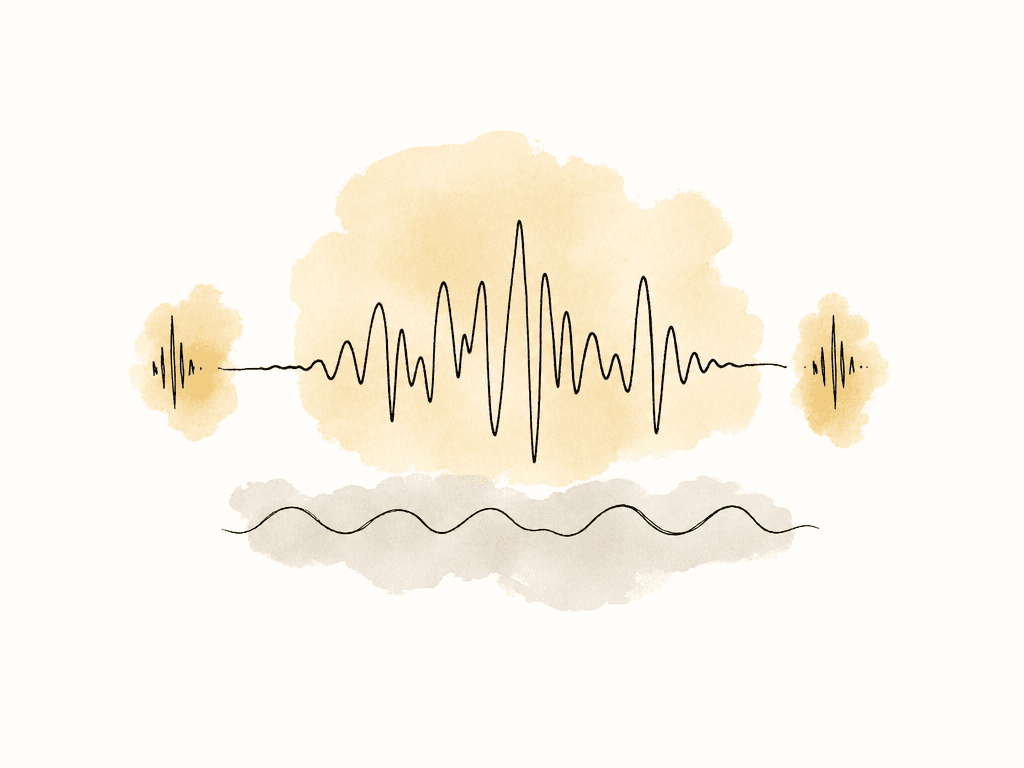
Dialogue is the anchor. If reviewers can't follow the words, nothing else in the reference mix matters. Start by getting production dialogue, ADR, scratch VO, and guide narration into a consistent listening range before touching music or effects. For an editorial reference, you usually don't need heavy cleanup. You do need enough level, clarity, and continuity that the scene plays. Keep voices centered unless there's a specific story reason not to. Use clip gain and broad automation before reaching for complex processing. If a line is buried, fix the level first. If a line is boomy, boxy, or thin, use gentle EQ only where it helps intelligibility. A light dialogue treatment might include:- High-pass filtering to remove low-end rumble
- Small EQ cuts for boxiness or harshness
- Light compression to smooth uneven performances
- Clip gain for word-by-word fixes on critical lines
- Short fades to remove edits, pops, and bumps
Keep the track layout readable
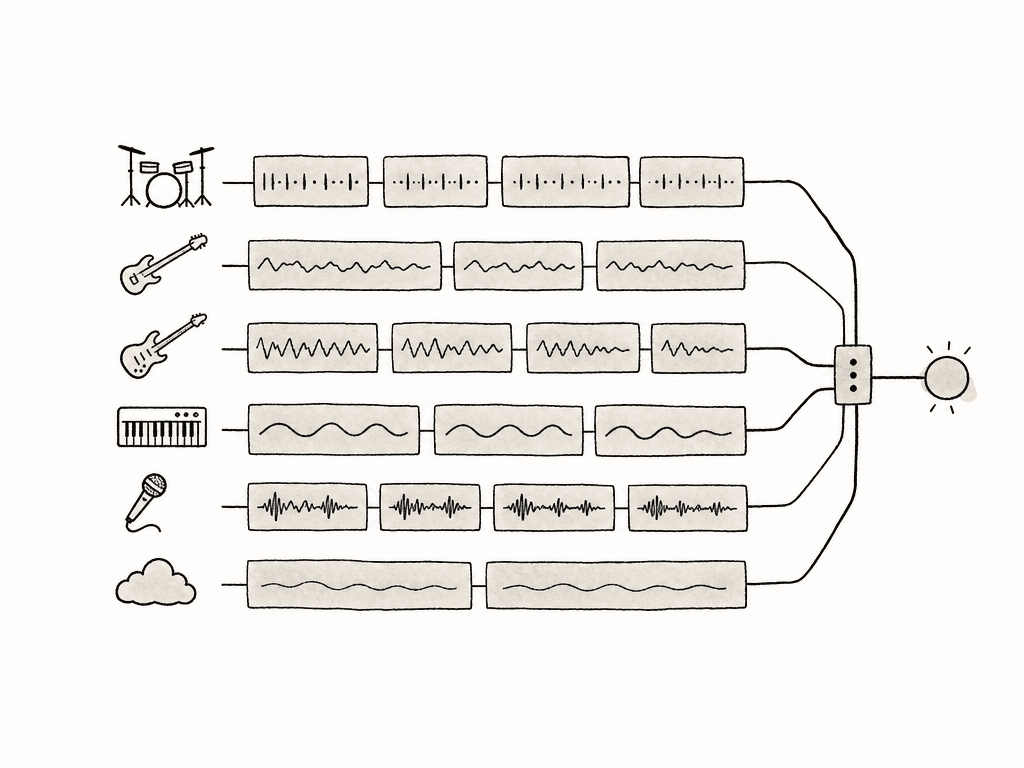
A reference mix is easier to make and easier to explain when you organize the timeline. It doesn't have to look like a final Pro Tools session, but it should have enough structure that another person can understand what they're hearing. For picture editorial, a simple layout usually works:- Dialogue and production sound
- ADR, scratch VO, and guide narration
- Music, split by cue where possible
- Sound effects and hard effects
- Backgrounds and ambiences
- Foley or temp Foley
- Design or special story sounds
- Print track or mix bus
Use levels as guardrails
You don't usually measure editorial reference mixes like final delivery masters, but you still need level discipline. If every export is wildly different, reviewers lose trust. If the mix clips, distorts, or gets crushed by the review platform, the notes become contaminated. For most review exports, use conservative settings:- Leave true peak headroom, commonly around -2 dBTP when specs are unknown
- Avoid brickwall limiting as a substitute for balance
- Keep dialogue consistent scene to scene
- Monitor at a repeatable level instead of chasing volume
- Compare against previous approved cuts at matched playback level
Export the reference mix with the picture
For editorial review, the reference mix usually travels with picture. That picture file is what producers, directors, showrunners, clients, and network teams will actually watch. You need to marry the audio to the correct edit, at the correct frame rate, with the correct start time, and with no mystery offset.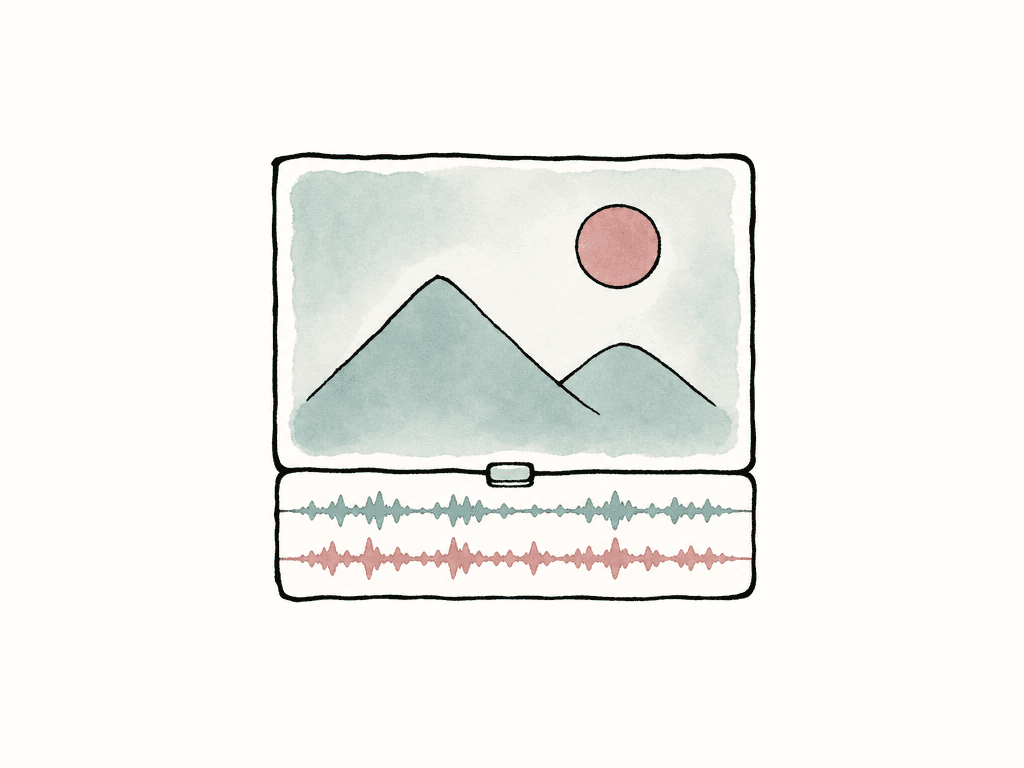
- The current picture cut
- A stereo reference mix
- Matching frame rate and duration
- Correct start timecode if the workflow uses it
- Visible burn-ins when helpful, such as version, sequence name, date, and timecode
- Head and tail format requested by the production, facility, or platform
Decide when to include splits or stems
A single stereo reference mix is enough for many editorial reviews. It's fast, simple, and hard to misuse, but there are times when split tracks or stems make the process cleaner. Consider exporting additional audio when the review process needs more control:- Dialogue, music, and effects splits for internal review
- Music-only exports for composer or music editor review
- Effects-heavy exports for sound design direction
- Narration or VO isolated for script and timing review
- 5.1 or immersive guide files for calibrated room playback
- Clean guide audio for localization, accessibility, or downstream prep
Make versioning boring
Audio reference mixes cause trouble when nobody knows which file belongs to which edit. The best versioning system is boring, predictable, and visible inside the file name and burn-in. A useful name usually includes:- Project or episode identifier
- Sequence or reel name
- Cut version
- Date
- Audio mix version, if separate from picture version
- Review purpose, such as director, network, client, or sound handoff
Communicate intent to the sound team
The sound team needs to know what the editorial team meant. Alongside the reference mix, send notes that separate creative intent from temporary survival work. The sound supervisor, dialogue editor, music editor, sound designer, and re-recording mixer will all listen differently. Good notes help them preserve the right things and ignore the noise.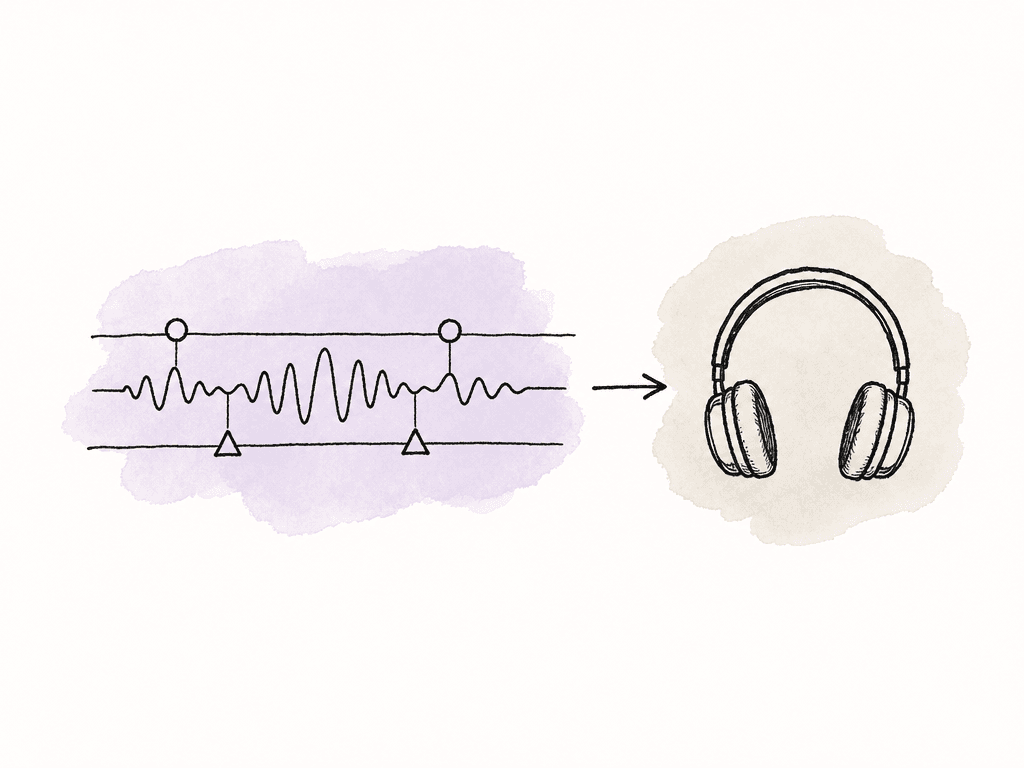
- “Temp music is approved for tone, not timing”
- “Door slam at 01:04:12:08 motivates the edit and should stay prominent”
- “Dialogue line at 00:18:44:10 is production only, likely needs ADR”
- “Client liked the dry intimacy of this scene”
- “Ignore the noise reduction on interview two, added only for review”
Avoid baking in problems
Some processing is useful for review, but some creates damage that follows the project. Be careful with these moves:- Heavy noise reduction on production dialogue
- Flattening dynamics with bus compression or limiting
- Printing reverb onto dialogue to fake a location
- Extreme EQ to match mismatched mics
- Stereo widening on music or effects that may collapse badly
- Pitch or time changes without notes
- Muting production sound that contains useful room, movement, or sync information
- Exporting only the reference mix and not the source elements
Match the mix to the review environment
Not every review needs the same reference mix. A director watching in the edit room, a client reviewing a web export, and a studio team sitting in a calibrated room aren't making decisions under the same conditions. For casual remote review, prioritize translation. Keep the dialogue clear on laptop speakers. Avoid huge low-frequency decisions that only work on the edit room sub. Don't rely on tiny stereo details to carry story information. For internal editorial review, you can be more dynamic if everyone is listening in a known environment. Still, keep levels consistent between edits so the room isn't reacting to volume changes as if they're creative improvements. For calibrated mix review, treat the export more formally. If your team intends the review to generate in-progress notes for a mix team or approve a near-final mix, confirm the required audio format, channel layout, loudness approach, video guide, session format, and naming convention in advance. That may involve a Pro Tools session, discrete 5.1 files, BWAV ADM, or separate video guide files rather than a simple stereo QuickTime. The format should follow the decision. If the team is reviewing the edit, send an edit-friendly reference. If the team is reviewing the mix, send mix-review assets.| Review context | Mix priority | Practical export | Main risk to avoid |
|---|---|---|---|
| Casual remote review | Clear dialogue and translation on laptops, phones, and web players | Stereo picture file with version burn-ins | Letting music, bass, or stereo width carry story information |
| Internal editorial review | Consistent playback between cuts and useful creative response | Stereo reference mix, with rough D/M/E splits only if needed | Mistaking a louder or denser temp mix for a better edit |
| Composer or music editor review | Cue timing, tone, temp status, and music intent | Picture reference plus music-only or guide music tracks | Hiding whether a cue is temp, licensed, original, or undecided |
| Sound design direction | Story-critical effects, design intent, and placeholder status | Picture reference plus rough effects split and clear notes | Treating placeholder sweetening as approved design |
| Calibrated mix review | Channel format, loudness approach, and near-final mix intent | Agreed Pro Tools session, 5.1 or immersive files, BWAV ADM, or separate video guide | Reviewing a stereo web file as if it represented the room mix |
Common ways reference mixes fail
Most bad reference mixes fail for simple communication and consistency reasons. Watch for these failure modes:- Dialogue is too low because your team never pulled down temp music
- The export clips even though the timeline sounded fine
- Review files have mismatched audio and picture versions
- The sound team receives the reference movie but not the editable audio turnover
- Timecode, frame rate, or start time doesn't match the turnover
The best reference mix is easy to outgrow
A good editorial reference mix gives reviewers confidence and gives the sound team direction. It keeps the dialogue intelligible, supports the emotional shape of the edit, preserves sync, travels with the right picture version, and makes clear what is temp versus intentional. The final mix should be better than the reference and still understand why the reference worked. If the rough music dip made the joke land, say that. If the temp ambience made the scene feel lonely, say that. If the dialogue treatment was only there to survive review, say that too. Editorial reference mixes make sure everyone is reacting to the same edit, the same intent, and the same story.FAQ
An audio reference mix helps reviewers judge whether the cut is working. It should make dialogue clear, support the emotional shape of the scene, keep sync reliable, and communicate intent without pretending to be a final mix.
Music should usually sit under dialogue and be automated around important lines. Temp music is often mastered and much louder than production dialogue, so it usually needs to be pulled down early. If music is meant to overpower dialogue for a story reason, that choice should be intentional and noted for the sound team.
Stereo is usually safest for broad editorial review because it translates across laptops, conference rooms, streaming links, and general playback systems. Use 5.1, immersive, or discrete audio files only when the review environment supports them and the team is specifically evaluating mix intent rather than just the edit.
Splits are useful when reviewers or downstream teams need control over specific elements, such as dialogue, music, effects, narration, or sound design. They should be clearly labeled as rough editorial splits if they aren't final stems. A single stereo reference mix is often better when extra files would create confusion.
Notes should separate creative intent from temporary fixes. Useful examples include whether temp music is approved for tone only, whether a sound effect motivates a cut, whether a dialogue line likely needs ADR, whether a music dip is intentional, or whether noise reduction was added only to make the scene playable for review.
Keep clear file names, but also keep each revision attached to the same review asset so notes don't drift between exports. Aspect stacks revisions together with version history, which helps teams distinguish a picture change from an audio-only reference mix update.


