Choose the kind of system you need first
A managed media library gives people an interface for browsing assets, searching, reviewing results, and controlling access. Aspect and Iconik provide those interfaces, although they differ in how they store or connect to originals. TwelveLabs also offers Jockey, a hosted library you can query through its agent or a Claude connection. A developer API gives an engineering team operations it can call from software. TwelveLabs can return matching video segments, but your application still needs a user interface, asset identifiers, access rules, and a dependable route back to production media. Use its Playground to try queries against your footage, then connect the returned video identifiers to the originals in your application.| Your main requirement | Product | How it handles the work |
|---|---|---|
| Producers find footage that editors can open from shared storage. | Aspect | Search returns matching moments, and Open in mount reveals the original in the shared drive. |
| Your library spans onsite storage and cloud buckets. | Iconik | Confirm which locations are indexed and how remote editors retrieve originals. |
| Search must live inside a custom application. | TwelveLabs APIs | Assign engineering ownership of permissions, result playback, and original-media access. |
| You want to query a hosted library through an agent or Claude. | TwelveLabs Jockey | Choose a knowledge-store capacity and account for its research-preview availability. |
Compare the information each search can use
“AI search” can describe several different capabilities. Visual search examines imagery, so it can find a silent shot of a cyclist crossing a bridge. Transcript search examines spoken language. Some systems match exact words; others can also find a passage about a concept without requiring the same wording.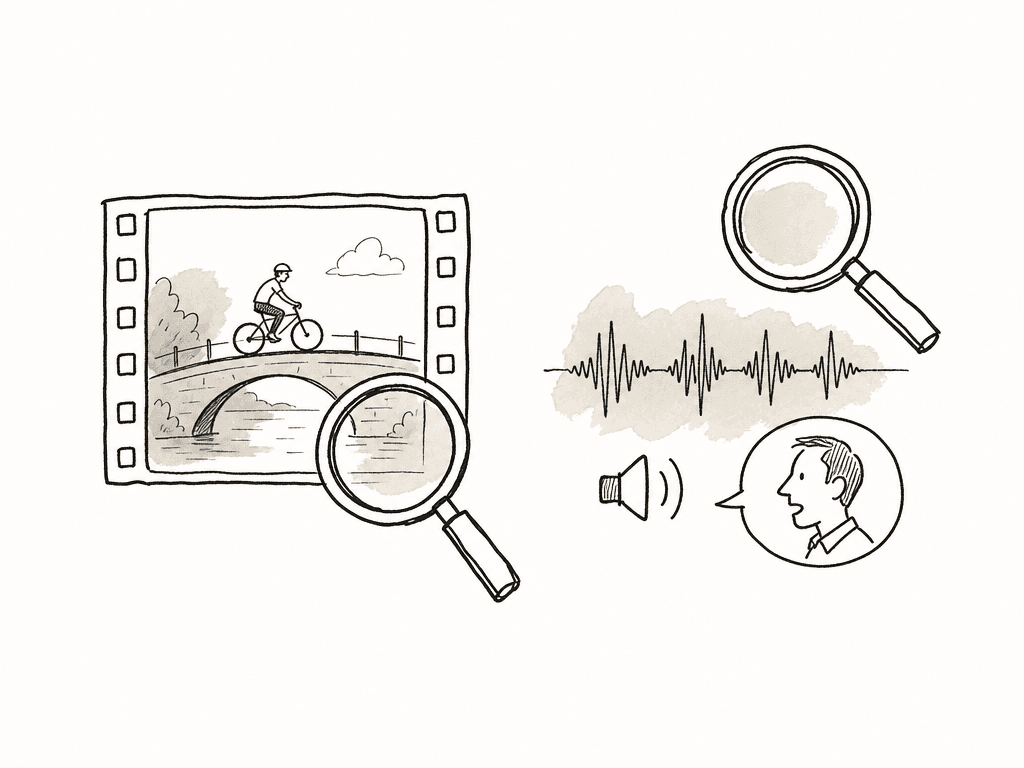
Aspect: search connected to shared original media
In Aspect, you can find a shot and pass its original file to an editor without moving between a separate catalog and storage system. Search covers visual content, spoken words, configured people, filenames, tags, and metadata. You can inspect and adjust the filters behind a request, then open the matching time range in the viewer. For example, search for “wide shots of our spokesperson at the factory from the autumn campaign.” Inspect the generated visual, people, and campaign filters, and adjust any that don't match the footage you need. Right-click a result and choose Open in mount to reveal the original on the desktop. The Aspect app for macOS and Windows presents the project as a drive, and streams file data as the editing application requests it. Search, file access, and review were built together, so the producer's search result stays connected to the file the editor uses.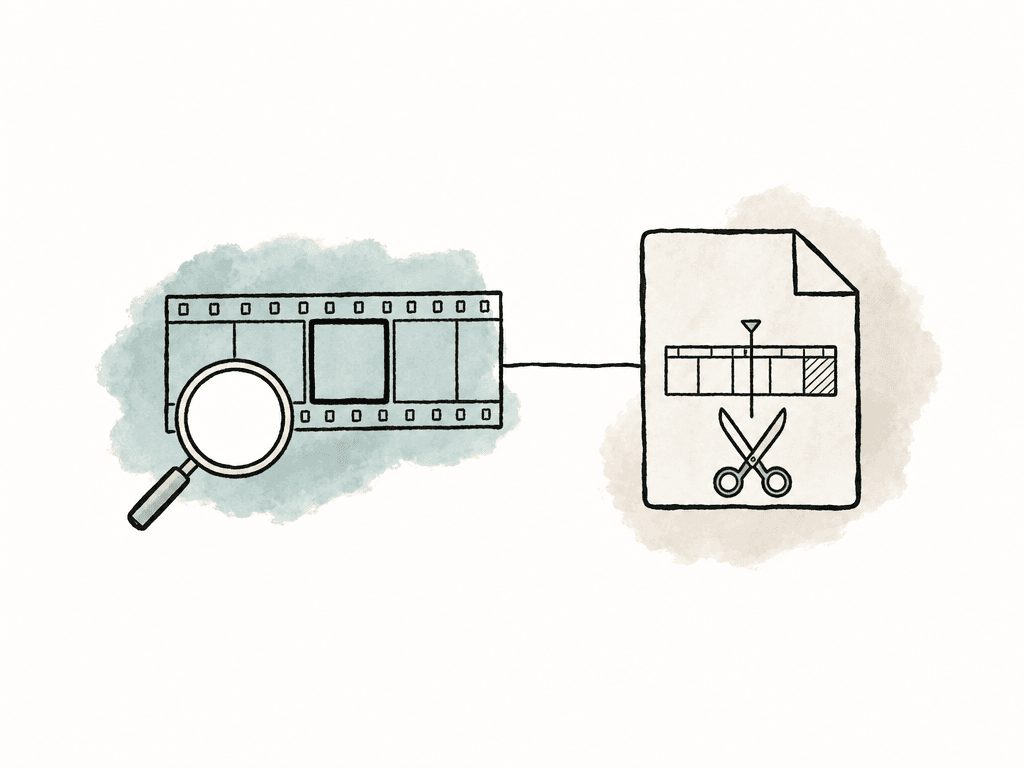
Iconik: a searchable catalog across existing storage
Iconik is particularly relevant when changing the location of every original would be costly or disruptive. Its hybrid storage architecture can index onsite storage through the Iconik Storage Gateway and connect to customer-controlled cloud storage. The catalog gives users a common place to search assets that remain distributed underneath. Its AI features include transcription, facial recognition, and object and scene detection that generate searchable metadata. Its search documentation also describes custom metadata schemas, controlled vocabularies, and time-coded transcript navigation. These are useful capabilities for organizations whose departments need consistent names and fields across a large library. Pay attention to how the visual requirement is implemented. Finding a generated “stadium” label and interpreting a complex description of camera movement are different retrieval tasks. Iconik's documented AI enrichment supports discovery, but the evaluation should establish how well the actual system handles your natural-language visual queries and where its results land in the player. The same care applies to originals. A search result doesn't give a remote editor access to a file on an office NAS. Try the transfer or editing integration with an original from each storage location. Iconik can preserve those locations, but someone still needs to maintain the connections and the route each editor uses to retrieve files.TwelveLabs: developer APIs and a hosted search agent
TwelveLabs provides APIs for building search into an application. Its Search API guide demonstrates Marengo 3.0 with natural-language, image, and combined queries. Searches can use visual, audio, and transcription information, including lexical or semantic matching of spoken words. Results return a video identifier and start and end times in seconds. Developers can also apply system or custom metadata filters. The entity search workflow uses reference images to define specific people and find them in indexed footage. This offers more control over query construction than a fixed interface, provided someone owns the implementation. The engineering work extends beyond sending a query. Uploaded content must finish indexing. Your application must map returned identifiers to the right original, translate relative seconds into an appropriate editing reference, and enforce the user's access to both previews and source files. If you're indexing a viewing copy, retain its relationship to the original explicitly.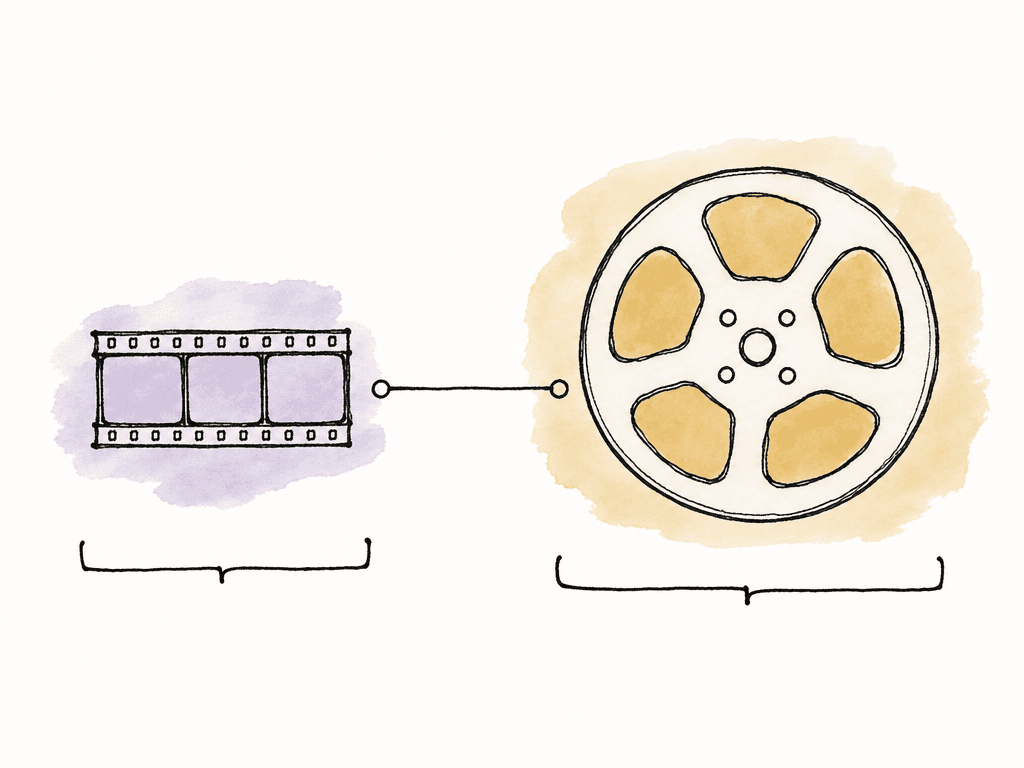
Run one comparable pilot before choosing
Choose footage from the jobs your team handles every week. For example, an agency could use 40 clips covering interviews, silent B-roll, repeated locations, different camera formats, and several versions of similar footage. Include the languages and recording conditions your producers routinely encounter. Before indexing, record known relevant files and time ranges for the queries below. Use the same footage and metadata in each service. When a system needs a converted input, document that conversion and preserve the original mapping so differences in preparation remain visible.| Query type | Example | What the result must establish |
|---|---|---|
| Exact dialogue | “We opened the new facility in April.” | The words occur in the returned passage. |
| Spoken meaning | A speaker discussing why the opening was delayed. | The passage addresses the topic even when its wording differs. |
| Silent visual content | A wide shot of a cyclist crossing a bridge. | The action and composition appear together. |
| Configured identity | The named spokesperson entering the factory. | The correct person appears during the requested action. |
| Custom metadata | Factory footage cleared for the autumn campaign. | The asset satisfies the maintained campaign and clearance fields. |
| No valid match | A scene deliberately absent from the sample. | The system's behavior makes uncertainty apparent. |
Compare the price of search and the library behind it
All rates below are in USD. A subscription that includes storage and an API bill cover different parts of the workflow, so keep the media library, indexing, queries, and application development visible in the budget.| Product or service | Published price | What the billing covers |
|---|---|---|
| Aspect Pro | Starts at $30/seat/month with monthly billing. | Includes 500 GB per seat. Lower storage rates are available for larger team requirements. |
| Iconik Starter | $0 per user/month for Collaborator, $9 per user/month for Browse, $65 per user/month for Standard, or $120 per user/month for Power. | No commitment. Storage, AI, and other services consume credits in addition to user costs. Professional and Enterprise use custom pricing. |
| TwelveLabs Developer Search API | Pay as you go: indexing, retained-index infrastructure, and search queries are billed separately. | The unit rates appear below. Your application and its connection to original media still need to be built and maintained. |
| TwelveLabs Jockey | Free: $0 for a 5 GB knowledge store. Plus: $20/month for 100 GB. Pro: $100/month for 500 GB. | These are monthly subscriptions for Jockey. The plans have different rate limits; the site does not publish numeric query allowances in its plan cards. |
| Charge | Rate | Billing basis |
|---|---|---|
| Video indexing | $2.50 per hour of video | Charged once when the video is indexed. |
| Embedding infrastructure | $0.09 per indexed video hour per month | Recurs while the indexed video is retained. |
| Search queries | $4 per 1,000 queries | Charges scale with query usage. |
Budget for a searchable library that stays usable
Request a quote based on your existing hours of footage, monthly additions, active editors, and storage locations. Separate initial indexing from ongoing processing, and ask which AI features require a particular plan. Include storage, transfer or retrieval charges, and the engineering work required for an API-based approach. Also establish how permissions, indexing exclusions, and deletion apply to the search layer. A departing freelancer should lose access to relevant previews and originals together. A retired asset should have a defined path out of the catalog and any separate index. Keep the search results and the editor's notes together when comparing tools. They'll show which queries found the right passage, which missed it, and how much work remained before the footage reached the timeline. If you're choosing a platform for both search and shared editing media, book a demo with Aspect using the shots and interview topics your producers need most often.FAQ
Aspect lets producers search footage and open the matching originals from a shared drive, with review and metadata in the same product. Iconik connects a searchable catalog to existing storage. TwelveLabs provides APIs for custom applications and Jockey for a hosted searchable library. The main differences are where the media lives, who maintains the system, and how search results reach an editor.
Visual search analyzes the image rather than relying on dialogue or a filename. In Aspect, you can describe an action, subject, or setting and get matching time ranges after the footage has been indexed. You can also combine that description with project metadata, such as a campaign or shoot date, to narrow the results.
Transcript search examines spoken language, either for exact words or related meaning. Visual semantic search looks for scenes, objects, actions, or compositions described in a query. A silent shot of a cyclist needs visual search, while a particular interview quote needs speech search. A useful evaluation includes both and checks that the result identifies the relevant moment within the file.
In Aspect, Open in mount reveals the original file on the desktop so an editor can open it in a creative application. Other systems may return a preview or an indexed copy. With a catalog connected to existing storage or a developer API, check how a result connects to its original file and how a remote editor retrieves it.
Use footage that reflects your regular work, with the same metadata and queries in each service. Record the files and time ranges that should match before searching, then count useful results, missed shots, and irrelevant results. Include exact quotes, silent scenes, people, custom fields, and a query with no valid match. Keep unsupported files and unfinished indexing separate from search errors.